You are here:    Home  > Blog  

Web Application Development Costs in 2026

You don’t need to have a thousand dollars to start off with your first web application. A few hundreds would suffice. But what is more important is strategy and the process behind it.

To bring a website, or a web app, or a progressive app to life, you need to determine the differentiating factors, the factors that affect the real cost, along with testing, maintenance, deployment and post deployment charges, and all that lies in between (the processes we are unaware, the copyrights, the legal documents, the security, the cloud hosting, the storage space, the physical and virtual servers, the designs, the prototypes, the development life cycle, the web development architecture. In this post, we’ll unpack the cost of developing web applications in 2026.

Why Does Budgeting Matter in Web Application Development?

At a preliminary glance, forming a budget for the web app might look like ticking off tasks in a to-do list. But, a well-thought-out budget is like laying the first layer of bricks before erecting the wall of a new house. This is because the web application development costs vary wildly depending on a multitude of factors. Without this the price tag of the application will spiral off and become out of control.

A few extra features here, a change in technology there, and before you know it, you’re staring at a massive bill. If you don’t account for these details early on, you might end up in a place where you’re scrambling to either raise more funds or reduce the scope of your project. How many times have you heard stories about projects running over budget because of unexpected challenges? It’s a common problem, and therefore, making a budget for web apps isn’t just important but essential.

What is the driving force that empowers Web Application Development?

Is it the cost, or the budget, or the software development process, or a mix of variables, or how complex (read: comprehensive) the website is? Or the region where it is being developed, or the skills and competencies of the developers? It’s not one, but all these factors need to be considered while determining the cost of development across the web.

How Much Does Web Application Development Cost in 2026?

For simple apps you need to pay somewhere in between  $12,000 to $40,000. For Mid-level apps you need to pay $50,000 and $150,000 and for complex apps pay somewhere in between $150,000 to $500,000+. These apps need advanced features like custom modules, AI, real-time data processing, or multi-language support.

Can you save money and also get a high quality product in return?

Create a minimum viable product to launch quickly and test your concept with users before committing to the full-scale development. It also helps you avoid unnecessary expenses for features that may not be crucial in the early stages.

Outsource development to regions with lower labour cost.

Use open-source frameworks and libraries that are free so that you save on development cost, as they provide pre-built solutions for common features. Just make sure the frameworks you choose are secure and well-supported.

For less complex projects, no-code or low-code platforms like Jotform or Webflow can be used. They let you create apps without needing deep technical expertise.

Tagging a few challenges

While these platforms have limitations, they’re often perfect for simple applications or MVPs, and they can cut down development time and cost significantly.

Should You Build In-House or Outsource Your Web App?

That’s a key question to deal with. Building something in-house would require you to dedicate resources physically.  Hiring developers from different locations to work remotely will have their own set of complications like challenges in communication, cultural and time zone differences. Meetings on time, agreeing upon a build mutually before proceeding onto the next step. 

Outsourcing to a web development agency can be a more cost-effective option as they often have more experience and can tap into a wider talent pool. They also handle everything from development to project management. But finding the right agency that aligns with your goals often requires persistence and patience.

The Web Development Pricing Trends might sound similar to what you had expected.

Emerging technologies are also shaping web development cost 2026. Incorporating AI for any automation – like chatbot or virtual engine, or search functionality, or presentation, or dynamic content generation requires specialized developers and extra time for integration, which drives up costs.

The average web development cost in 2026 will always be higher than what it used to be in the  previous years. It is a combination of inflation, and the user’s expectations. Irrespective of what you are planning to build, having a reliable website pricing guide for 2026 is essential for staying on track.

The cost to develop for a small business is always less. A custom website vs. template website would require you to consider flexibility and long-term value. For those venturing into online sales, the e-commerce website cost in 2026 can range from $20,000 to over $100,000 depending on the number of products, payment systems, and security features you need.

Website maintenance costs typically include hosting, security updates, bug fixes, and occasional design tweaks. Also the hidden web development costs like third-party API fees, license renewals, or unexpected scaling needs to be considered in case you signed up for the cost of a small business website initially.

When deciding about freelance vs agency web development costs, weigh everything down to the thinnest level.  Understanding these UI/UX design cost, and cost-effective web development strategies is essential to estimate your technology stack cost. Explore low-code/no-code costs in 2026, if you’re building something simple. Offshore web development costs can still offer big savings, but ensure you’re considering communication barriers and testing/quality check.

Wrapping Up: How much does a website cost in 2026?

My answer might not suit your business, and your idea might not fit into my budget, but if I have skilled developers that can do the work that you desire, you might consider hiring a development team from us. Sounds good? Step in.

Why businesses are opting for Offshore Development

Why do companies like FINANTEQ leverage offshore mobile app development teams instead of hiring in-house developers? This is because offshore teams are frequently employed to (1) build and maintain e-commerce backends, custom CMS solutions, and business process automation tools for online retail businesses. Companies often outsource offshore providers for (1) enterprise resource planning systems, (2) customer support, (3) Information Technology services, (4) Back-office operations, (5) Finance and accounting, and (6) Human resources, Manufacturing.

Offshore development helps when local talent is incapable of delivering according to your expectation, but it also brngs cost savings, and a lot of expertise that you had never imagined. People across diverse backgrounds pool in with software programming languages, frameworks, libraries, databases, hosting services, virtual cloud platform, business models, environment, testing, maintenance, call and chat support, license and certification, legal copyrights, and a lot more that lies in between.  And this is not restricted to any one platform.

A wide array of web applications, including social media platforms, e-commerce sites, and data analytics dashboards, are developed using offshore teams. These teams leverage a diverse set of technologies such as backend frameworks like ASP.NET Core, PHP with Laravel, Python with Django or Flask, and the MERN stack (MongoDB, Express.js, React.js, Node.js). Frontend development frequently utilizes React JS and Angular.

These projects incorporate SQL databases (PostgreSQL or NoSQL), are deployed on cloud platforms like AWS or Azure, and Backend Frameworks for Python, Database Technologies, cloud platforms, DevOps tools and practices, specific application types (e-commerce platforms, content management systems, or enterprise resource planning), benefits from modern DevOps practices and CI/CD pipelines.

Startups and enterprises hire offshore software development teams to have a quick MVP, without upfront investment. Projects requiring expertise in areas like Big Data (Hadoop, Cassandra, Spark), Cloud Consulting and DevOps (AWS, Microsoft Azure, Docker), or Test Automation (Selenium, Appium) frequently utilize offshore software development.

In simple terms, offshore development is when companies hire teams from other countries to handle software or app development. The appeal? Lower costs, access to niche skills, and the flexibility to scale up or down as needed. It’s like finding the perfect pair of shoes that fit your budget and style, just with a lot more coding and fewer shoe sizes involved.

While offshore teams handle a variety of tasks from building apps to custom software solutions, the core benefits of offshore software development reiterate efficiency and cost savings. Why offshore software  development for startups is gaining momentum? Let’s find out!

7 Reasons Why Businesses are Opting for IT Outsourcing

  • Cutting Costs
  • Access to Specialized offhore Talent Pool
  • 24/7 Productivity with Different Time Zones
  • Business scalability outsourcing with Less Hassle
  • Faster Time to Market
  • Focus on core business
  • Access to emerging technologies

Most Important- Why should you choose offshore development?

Some nano and micro influencer offshore teams offer flexibility to scale resources up or down based on project needs. This process accelerates project timelines due to efficient resource allocation and potentially longer working hours across different time zones. Any software development company should opt for offshore development to reduce costs by (1) hiring economical labourers, (2) gain access to specialized skills and expertise not available locally, (3) improving productivity through 24/7 operations due to time zone differences, and (4)  increasing efficiency by allowing internal teams to focus on core business activities. It also provides (a) scalability, (b) mitigates risks, and (c ) the build can be deployed faster.

Hiring from outside, does it have any benefits?

As already discussed hiring offshore developers brings a lot of cost savings in form of (1) reduced labor, (2) operational expenses (salaries, hardware, office space). Outsourcing development allows internal teams to focus on their primary business objectives and long-term strategies instead of being bogged down by routine tech tasks. Differences in time zones can facilitate continuous work, leading to 24/7 productivity and faster product delivery by overlapping work hours between different locations. Offshore development provides the flexibility to scale teams up or down quickly based on project needs, which is crucial for rapidly growing businesses and projects with fluctuating demands. Custom software development companies often provide access to the latest development tools and modern technologies like AI, cloud computing, and blockchain, helping businesses stay competitive.

Why do businesses opt for offshore development?

Businesses opt for offshore development to access a global talent pool, lower costs, and accelerate innovation. If you wonder how does offshore development reduce costs, there are some key trends to look out for, include the rise of AI and hybrid models, while persistent challenges include managing communication, quality control, and security. Alternatives like onshore and nearshore development offer different balances of cost and control.

What options to look out for when offshore development is not available?

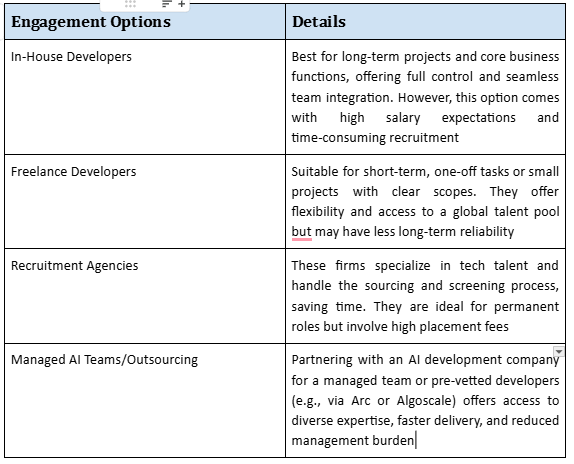
There is a persistent question in the minds of businesses and app development companies, which type of development model to follow, Offshore vs. in-house development, what could get me the returns faster, or at least equal the investment cost?

Onshore development Nearshore development In-house development: Freelancers/Extended team Hybrid models
Outsourcing to a company within the same country. This offers high cultural and language alignment but comes at a significantly higher cost. Offshoring for business in a geographically nearby country, typically within the same or a similar time zone. This provides maximum control, cultural alignment, and deep product knowledge but involves higher overhead costs and recruitment efforts. This offers flexibility and cost savings for specific skill gaps but may lack the long-term stability and integration of a dedicated team. Having a core in-house team for strategic tasks, a nearshore team for high-collaboration projects, and an offshore team for cost-effective feature development.

I shouldn’t say this, because boundaries are blurred – But still, major players in offshore development are

The market includes major global and regional players, with several countries and companies prominent in the space: (1) Key destinations for offshore development include India, Vietnam, the Philippines, Poland, Ukraine, and countries in Latin America; (2) Large, well-established firms like Tata Consultancy Services, Infosys, and EPAM Systems serve enterprise clients, while a wide ecosystem of smaller, specialized companies also exists.

Businesses stumble upon upside down sometimes when they face something like this

  • Implementing risk management plans, signing non-disclosure agreements, and planning for budget overruns.
  • Overseeing a remote team requires Agile methodologies, clear KPIs, and robust tools like Jira, which are essential for tracking progress effectively.
  • Finding out potential hidden costs beyond hourly rates, including expenses for communication tools, travel, and additional management oversight.
  • Navigate complex legal and regulatory environments in different jurisdictions.
  • Finding the right people, evaluating their technical expertise, industry experience, portfolio, client references, and communication capabilities.

What are the key takeaways?

Offshore development is not without its challenges, but the benefits often outweigh the potential risks if managed properly. If you’re looking to build something innovative without burning a hole in your budget, offshore development might just be the solution. But, like any business decision, it’s important to weigh the pros and cons, understand your specific needs, and choose the right partner.

Offshore development will leverage a global network of expertise to drive innovation. As the world becomes more interconnected, businesses are increasingly looking beyond borders to stay ahead. Offshore development will facilitate it.

Vehicle Maintenance App Development- Features, Cost, & Benefits

We’ve all had that sinking feeling when our car decides to break down unexpectedly, and we’re left scrambling to figure out how to handle it. It might be a flat tire or a more serious mechanical issue, but either way, it disrupts our routine. That’s why vehicle maintenance apps have become a necessity for car owners who want to avoid these unpleasant surprises. A solid vehicle maintenance app does much more than just remind you about oil changes; it becomes a personal assistant for your car, tracking everything from service history to emergency roadside assistance. If you’re considering developing one of these apps, or if you’re simply curious about how they work, you’re in the right place.

That’s the reason vehicle maintenance apps exist

Yes, many vehicle maintenance apps already exist on the market, such as CARFAX Car Care, Drivvo, Simply Auto, and AUTOsist. A new app can differentiate itself by offering advanced features like AI-powered diagnostics and predictive maintenance. It involves using AI and machine learning to analyze vehicle data (like driving patterns and mileage) and predict potential issues before they become serious problems. Offer real-time diagnostics by integrating with a car’s onboard diagnostics (OBD-II) system using a Bluetooth dongle. This allows the app to interpret “check engine” light codes and report on vehicle health instantly.

Why Should You Build a Vehicle Maintenance App?

Building a vehicle maintenance app can be of great use for both individual car owners and businesses with fleets, because vehicles are complicated, and maintaining them can be a hassle. A good app can prevent delay, if not costly repairs – by helping drivers stay on top of service schedules, keep track of expenses, and ensure their cars remain in peak condition.

What do vehicle maintenance apps feature?

●       Vehicle Profile
A maintenance app should let users create individual profiles for each vehicle, logging make, model, year, and VIN.

●       Service Reminders
Based on mileage or calendar intervals prevent neglected maintenance. Oil changes, tire rotations, inspections they’re only useful when done on time.

●       Service History Log
An app must log each service entry—date, mileage, cost, and description. It’s non-negotiable for warranty disputes or secondhand resale credibility.

●       Document Storage
Insurance, service receipts, warranty certificates all should be stored digitally within the app.

●       Fuel and Mileage Tracker
logging every fill-up gives clarity on mileage patterns and fuel consumption—key data for diagnosing engine performance or cost trends.

●       Dashboard and Reports
A real-time dashboard should display costs, mileage, and fuel usage. Not optional. It’s the baseline for performance analysis.

●       Service Locator
With filters for distance, price, and ratings, the app becomes a decision tool—not just a tracker.

●       The app should connect them with towing and emergency services, fast.

●       User Reviews and Feedback
Let users leave ratings and feedback on service centers. This adds accountability and helps others avoid poor service providers.

●       Real-Time Diagnostics
 Why wait for a dashboard light to flash? Integration with OBD-II gives real-time access to fault codes. This enables early action—before a warning light becomes a repair bill.

●       AI-Powered Predictive Maintenance
Use predictive models to forecast failures before they happen. Downtime prevention should be proactive, not reactive.

●       A diagnostic chatbot can guide users through symptoms and basic troubleshooting.

●       Booking and Marketplace Features
Can a user find, book, and pay for a repair without leaving the app? They should. Integrate booking engines and mobile mechanic access to make the app a complete tool, not just a tracker.

●       Fleet Management Dashboard
Fleet dashboards should centralize vehicle health, diagnostics, and maintenance scheduling across the full asset base. Anything less wastes time and resources.

●       Smart Inventory Management
How do fleet operators manage spare parts without manual tracking? They don’t. Automating inventory based on service needs prevents both overstock and critical shortages.

●       Integrated Marketplace
Users should discover, compare, and book local services or buy parts directly inside the platform. A true maintenance app doesn’t send users elsewhere to finish the job.

●       Digital Service History
 Is the record of a vehicle’s upkeep trustworthy? Cloud-based logs with restricted access prevent tampering and loss. This matters when selling, insuring, or disputing warranty issues.

●       Transparent Pricing and Scheduling
Do users know what they’ll pay before they arrive? They should. Price transparency and real-time availability reduce friction and increase user confidence.

●       Gamified Rewards
Does routine maintenance offer any reward? It should. Let users earn incentives for timely service or safe driving.

How Much Does It Cost to Build a Vehicle Maintenance App?

The features in the basic, intermediate and comprehensive app will range in between $10,000 to $100000+ for including all essential services like reminders, service history tracking, basic expense tracking, real time diagnostics, predictive maintenance, integration with vehicle sensors, fleet management, GPS tracking and smart inventory management.

What if a dashboard fails you? It could be a wake-up call for vehicle maintenance apps.

I have spent close to 1.5 decades in content marketing, enough to know that legal fine print is often written less for clarity and more for insulation. I know how legal teams work, and can say with certainty that both major brands in this story likely have something buried deep in their terms and disclaimers that clears them of responsibility.

And yet, that doesn’t erase the perception created – the illusion of safety.

A close friend wore a high – end smartwatch for years. After intense sports matches, it would buzz dramatically, alerting him as if he were on the brink of a heart attack. He’d laugh it off. Ironically, when he actually had one, that same device – with all its sensors and tech stayed silent. It lulled him into complacency. He waited too long to seek help, assuming he was being watched over by technology.

That assumption nearly killed him.

No not everyone will have heart attacks but every car, bike, or truck will break down at some point. It’s not a question of “if” but “when”. And just like with wearable health devices, many drivers are cruising around assuming their vehicle maintenance app service has them covered. Does it really?

Most users won’t research about mobile app development services and what their apps can or cannot do. And when the engine seizes at 2 AM in a remote area, while it is raining heavily, and no help is in vicinity, or when break failure leads to an accident, they’ll realize their assumed too much, too late.

“The cost of developing a comprehensive system is a fraction of the cost of the chaos it prevents.”

The Future of E-Commerce – How Artificial Intelligence is Changing the Game

Tweaking the supply chain, personalizing the product so that it reaches the customers on time, would be one thing that would be extremely important for the future of ecommerce, looking at the traffic conditions, delays due to weather

If you don’t have the right product to ship at the right time, it’s not going to make the customer very happy. So supply chain is really a part of that and that’s going to bring faster through put in distribution centers using computer vision robotics, simulation all the way to last mile delivery optimization; Leading edge retailers are looking at their supply chain as well the shipping entrance.

That was a random pick from a video I watched over the internet, where they were discussing the onset of AI into the existing ecommerce operations.

Consider this conversation:

Q: What truly makes an e-commerce business work? Is it simply a website that sells things online?

A: Not quite. Think of it as having two living parts. One faces the world, the store that customers see. The other works quietly behind the scenes, the machinery that makes sure every order arrives where it should.

Q: Online shop fronts can be treated as a website!

A: Yes, because they depict a product management system with organized descriptions, prices, and images.

Q: What happens when a customer decides to buy?

A: The shopping cart and checkout system, plus payment gateway safeguards each transaction, encrypting information.

Q: Is it essential to know what is in stock?

A: Yes, the inventory management system acts as the store’s memory, that keeps a count of items to be kept on shelf, to be restocked, what is about to go out of stock, and what needs to be replaced at the earliest.  Along with this security – encryption, SSL certificates, fraud detection is a great concern.

Q: And how does one maintain relationships with customers?

A: Through a Customer Relationship Management system, which remembers who the customers are, what they prefer, and how best to reach them. Add to this the analytics tools that reveal patterns in behavior and sales, and the merchant begins to see not just what happened, but why.

Q: What goes behind the scenes? Some internal operations?

A: It starts with sourcing the product (deciding where goods will come from), whether manufactured, wholesaled, or dropshipped. Once orders are placed, order management ensures the stage of the product is changed with every process in action. Order placed -> order packed -> order shipped -> order reached the final destination -> order out for delivery.

Q: And the goods must be stored somewhere before they are shipped?

A: Inventory and warehouse management keep the physical flow efficient, followed by fulfillment and shipping logistics. Selection of carriers, managing returns, and balancing delivery times all have to be structured to satisfy the customers.

Q: I imagine reaching customers also requires more than just good logistics.

A: Through search optimization, social media, and email campaigns, the store invites strangers to become patrons.

Q: And after they buy?

A: Customer service begins, ensuring that help is available before, during, and after the sale. Meanwhile, processes like interpreting numbers, managing payments, ensuring taxes are met are managed with data analytics and financial management work in the background,

Q: It seems, then, that e-commerce is not merely about selling online, but about harmonizing many moving parts.

A: Well said. The most successful merchants are not those who build a store, but those who understand how every unseen gear turns the wheel of trust and efficiency.

Topic of the Motion – Fueling Ecommerce with a dash of AI

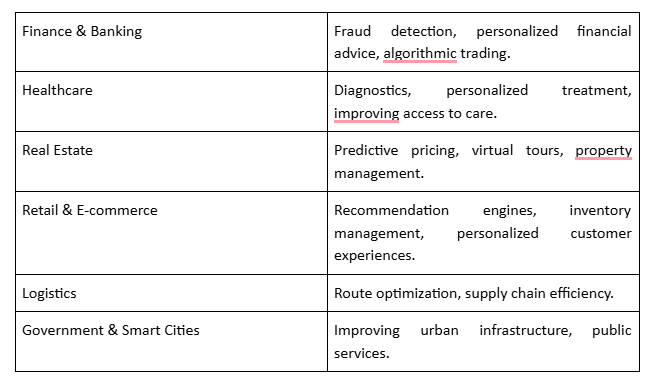
E-commerce Artificial Intelligence has triggered a quiet revolution. While earlier an online store used to merely display products, it now manages everything smartly. Because AI has automated the way usual ecommerce works, low quantity, or bulk quantities are detected in advance. Workplace hazards can be managed adequately.

If commerce has always been about knowing one’s customer, AI makes that knowledge almost intuitive with tailored experiences.

Beneath it lies an invisible architecture: (1) smarter supply chains, (2) predictive inventory systems, and (3) logic of accurate demand forecasting. Through data drawn from countless signals, AI analyzes not just what customers do, but what they will likely do next.

A business that once relied on instinct now measures everything with precision: (1) warehouse space, (2) shipping routes, (3) delivery times, and even (4) sustainability goals.

For many enterprises, partnering with AI development companies or eCommerce app development services becomes essential, as few organizations can build such complexity on their own.

Chatbots now speak in neutral tone, that seems personalized and human like. Predictive systems notice trouble before it escalates. In this sense, customer service evolves from reaction to anticipation, from answering questions to understanding people.

With each year, virtual and augmented realities now invite customers into spaces that exist between worlds: virtual pop-up shops, digital try-ons, and AI-curated exhibitions.

Even the act of payment grows invisible: biometric verification and password-free checkouts promise a frictionless checkout for every purchase.

Choosing the Right AI Solution

How does one choose the right path through such abundance? The answer lies not in adopting every tool, but in understanding purpose. A thoughtful business seeks harmony between technology and identity. The right AI solution should enhance what already exists while preparing for what is to come.

A reliable Artificial Intelligence app development company will begin by asking questions: What problem must be solved? What data do you have? What experience do you want to create?

But as AI spreads through commerce, questions of privacy, transparency, and fairness rise to the surface. The challenge is not only to make systems that are intelligent, but also humane, to ensure that automation does not erase empathy, and that data remains a tool for service, not surveillance.

The Great App Debate: PWA vs Native Apps – Which One Reigns Supreme?

Progressive web apps are revolutionizing how we think about web and mobile experiences. They’re bridging the gap between websites and native apps, delivering exceptional performance across all devices. Companies like Twitter, Starbucks and Alibaba have seen massive engagement increases and reduced development cost by using PWA.

A PWA development company creates applications that work seamlessly without internet connectivity. They instantly load with service workers. They are compatible across platforms, and operating systems. Once coded, such applications can also be run with one or two changes on a different operating system.

Although it is basically a website, popularly a web app, but it looks and behaves just like a normal mobile app. Once you open a PWA on your mobile phone (Android or iOS), you will find three dots, click on it and there you will find a link to create a desktop icon – that is nothing but a shortcut to the PWA website. That does not require any extra storage space or phone memory.

That frictionless experience definitely ups user experience (while at the backend it reduces the development time by 50% to 70%).  Such applications are often tagged with push notifications that engage users even when they’re not browsing.

PWA’s are automatically updated, so whenever you happen to access them, expect to always browse the latest version.

What have I recently spotted with respect to PWA’s?

  • Advanced caching strategies enabling complex offline workflows
  • Web Assembly integration for near – native performance
  • Improved iOS support bringing PWA’s to Apple ecosystem
  • Enhanced API access (Bluetooth, NFC, File System)
  • Better SEO indexing by search engines

Tips for seamless multi-device integration

  • Responsive design first – design mobile -first, scale up intelligently
  • Optimize asset delivery – Use lazy loading and image optimization
  • Implement smart caching – cache strategically, not everything
  • Test across devices – Real device testing is non-negotiable
  • Progressive enhancement – Build layers of functionality
  • Monitor performance – Use lighthouse for continuous optimization
  • Handle network variability – Graceful degradation is key

How to check which option will be suitable for your business?

When deciding between a Progressive Web App and a native app, the “right” choice depends on your specific goals regarding budget, timeline, required functionality, and target audience.

What to expect out of the selection? What will suit you better?

So, why were Progressive Web Apps created? When native apps were there…when web apps were there…when websites were there…when cross-platform apps or hybrid apps were there, why was there a need to have another app type?

Once, the web and the world of mobile apps stood apart—each strong in its own way, yet each limited. Websites reached everyone but lacked the polish and power of native apps. Native apps, in turn, delivered speed, offline access, and push notifications—but demanded time, money, and separate development for every platform.

Developers began to ask: Why must we choose between reach and performance? Why not have both, a Native App development company and a PWA development company, as needed? Out of that question, Progressive Web Apps were born.

PWAs were not created by chance; they were a deliberate answer to a divided digital landscape. Their purpose was clear—to bridge the gap between the web’s universality and the native app’s precision.

For businesses, PWAs offered relief from complexity. One codebase, one application—working across iOS, Android, and desktop alike. For users, they offered faster loading, reduced data use, and engagement.

And unlike native apps, PWAs walked their own path to distribution – No app stores, just a URL.

Why do I like PWA more?

Ask yourself first: what do you value most in this project, speed of development or depth of experience? If your goal is to reach as many users as possible with limited time or budget, does it not make sense to choose the path that runs through the browser? A Progressive Web App offers that reach, with lower costs and simpler maintenance.

But consider another question: will your app demand the full strength of the device? Will it rely on the camera, GPS, sensors, or complex real-time performance? If so, would a native app not serve you better, built precisely for the platform it inhabits?

The choice is not about which approach is superior, but which serves your purpose more faithfully. If the heart of your app can live comfortably within a browser, choose the web. If it must breathe through the hardware itself, choose native.

When is it a time to make a choice..

There comes a point in every project when a choice must be made what kind of app should it become? The answer depends not on trends, but on purpose and constraint.

Choose a Progressive Web App when time and money are scarce, and when your goals align with what the browser already does best. If your app’s core functions reading, searching, sharing can live comfortably in a web environment, a PWA is often the wiser path. It thrives on visibility, easily found through search engines, and spares you the burden of multiple versions for different devices.

Choose a native app when your ambitions reach deeper into the hardware when you need the camera, GPS, sensors, or advanced performance that only a device’s native language can offer. If your users expect something rich, responsive, and finely tuned to their platform, the native route delivers that level of refinement.

And sometimes, the world is not so binary. A hybrid approach using tools such as React Native can bridge both worlds. It allows one codebase to serve iOS and Android while still achieving a near-native feel. For many, this path offers balance: efficiency without too much compromise, speed without the cost of fragmentation.

The right choice depends on what your app truly needs to do—and how quickly, or sustainably, you must bring it to life.

How have these companies leveraged this technology?

  • Twitter Lite created a PWA that provides a fast, engaging experience, with a 65% increase in pages per session.
  • Instagram created a native app that leverages device hardware, with over 1 billion downloads.

Best Practices

By considering their specific needs, app development companies can choose the best approach for your app development project.

– Use PWAs for simple, informational apps, or for reaching a broad audience.

– Use native apps for complex, immersive experiences, or for leveraging device hardware.

– Consider a hybrid approach, combining the strengths of both PWAs and native apps.