You are here:    Home  > Blog  

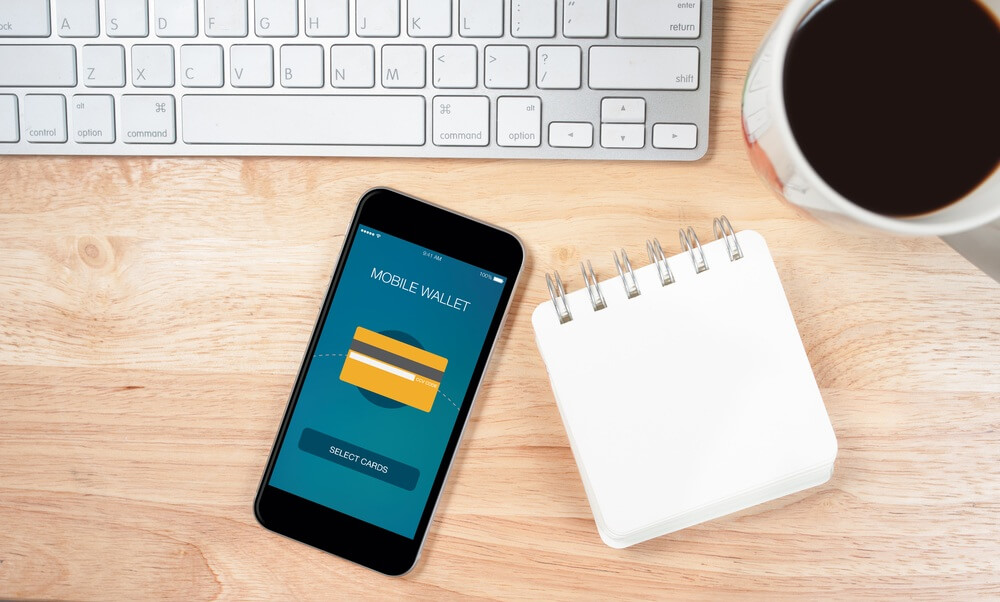
Should You Add Mobile Wallet Payment Option in Your Store?

mobile wallet payments

It won’t be an exaggeration if we consider smartphones to be a virtual part of the human body or at least their closest companion that stays with them 24/7. It is this intimacy which has sprouted the so-called mobile app revolution, making smartphones the one-stop solution for all their entertainment, utility, shopping and communication needs. But there is still one major link missing- finances.

Yes, they can use their phones to make payments for all their needs, but their affinity to those plastic cards doesn’t seem to have vanished.

Let’s put it simply- mobile wallet payment hasn’t taken off like expected and certainly not at par with other services like shopping and entertainment. But the fact that they are still in their infancy creates reasonable confusion over the magnitude of success they may or may not achieve in the future. However, success or no success, with all the hype around and multiple large corporations getting into the mobile wallet domain, it can be well-guaranteed that a mobile wallet won’t be a failure.

But before we even begin to get into the argument, one thing should be spelled out clearly- we are only looking to find out if the value the mobile wallets return is worth the cost and effort it takes to develop it. So, if you are a large enterprise or have ample resources at hand, just go ahead and add a mobile wallet because even if it won’t return many benefits, there isn’t anything to lose with this experiment either.

Now the small and medium scale businesses need to consider two simple figures– 1. The total cost it takes to support mobile wallet payment; 2. The total returns in terms of increased number of customers. If the returns are higher, go ahead. If not, wait for a while for mobile wallets to gain some more ground.

The calculation of cost consists of two factors– 1. The initial cost of the technical upgrades like payment gateway and API integration for online sellers and POS upgrades for offline stores; 2. The transaction fee/ service charge that the wallet operator levies on each purchase. While the one-time initial cost of upgrading may seem large, it should be considered as an investment and it should be actually the per transaction cost that must be carefully scrutinized.

On the return front; however, things are a little tricky to access. For instance, many business owners simply count the number of customers who used mobile wallets to make payment as a measure of the value it returns. But this approach is misleading. What actually happens is that when you add mobile wallets, many of your existing customers who otherwise used credit cards/ cash will then move to mobile wallets, and this is actually cannibalizing your own sales, adding no value. What you should look out for are the new customers that mobile wallets brought to your platform.

On the closing note, as discussed in the beginning, mobile wallet usage isn’t skyrocketing as it was initially expected so when most of the businesses will pitch their cost against returns, chances are they will not find it feasible at this point. But there is one other aspect that though it can’t be acutely measured, it must be taken into consideration before finalizing any decision- the opportunity cost. Since mobile wallets are a relatively new product and if they explode in the future, the early-adopters will indeed be the ones to gain the maximum benefits.

Secure Mobile App Development: Techniques you should know

mobile app development security standards

We have entered the times when we have achieved and reached certain standards of practices and processes that contribute to transform our ideas into resource-driven powerful mobile apps. These app development processes and propositions keep advancing in their functional dynamics to allow you authentic solution that meets your business needs effectively and resourcefully.

This makes you achieve a better value and higher compliance in terms of product features, communication facility, technical traits and user interaction. With this it covers everything and takes in all to contribute to advanced needs of the new-age businesses. But something that really needs to be attentively catered on a regular basis is the need for app security.

This is because there are incessantly generated threats and erupting risks in the online space that keep the applications’ vulnerability to hack attacks high and make them prone to damage and deterioration.

To get rid of getting into any compromising situation you can go with these security practices while developing your mobile app:

Utilize Secure Mobile App Development Options

The businesses that go with opensource development options mostly aim at budget and quick solutions. In the attempt of achieving a comparatively cheaper app solution they choose to go with a higher risk of online threats. If they do not go with proper remedial options or apply proper governance policies the attempt could cost them lethal security breaches. Considering that, it’s highly advisable to go with core development options or otherwise use secure open source components to avoid such situations.

Secure the App Code

The code of the mobile app should be protected with the help of encryption. While doing this it is advised to write the code in a way that it is tough to read and crack by malign forces. So that they cannot misuse it for any malignant purposes. Here, you can go with code obfuscation as a measure. Adding to the security, you can use algorithms along with API encryption. Further, with the help of source code scanning you get to deal with vulnerabilities even better.

Include SSL and HTTPS as Security Measure

While you approach installation, and are all set to launch your product go with Secure Socket Layer security allowing encrypted communication between clients and servers. With this security measure, you can put up with higher value of security and will be at least risk of being challenged by hacking activities.

Password Controls

To be able to make it even tougher to crack, you can go with advanced password authentication options. Appoint the controls that demand complex password inputs and multi-part authentication criteria. Biometric recognition can further add to the density of password controls and make your accounts and accessibility options hard to crash.

Application Layer Security

You can ask your mobile app developer to add a security setting option for users allowing them to add their own layer of security to the application as per their preference. This could be best approached by allowing them multi-tier customization options to application layer security.

Mitigating Third-party Security Risk

The risk of security threat is not completely gone till the time you have not addressed the possible third-party risk issues. To prevent these, you need to create and sporadically review SLAs and NDAs and keep them updated as per the latest security guidelines. Apart from this you can work on options to allow you to communicate threats to the third-party channels to allow you a better control over security propositions.

Final Words

Security is certainly one of the most important aspects of mobile app development and you need to address it at all levels and from all perspectives to have a perfect product with you. Going with these practices and techniques should help you a great deal in meeting your purpose of app security.

What Mobile App Development Can Gain from Model-Driven Approach

model-driven approach for mobile app development

The debate over the prospects and influence of mobile applications is long dead. Today, with every second person in urban areas using a smartphone, every industry is exploiting this massive paradigm shift and no one really doubts the immense potential it still holds.

Be it a business endeavor, a communication medium or a solution for businesses to streamline their various dimensions, mobile apps have now penetrated almost every space and the effects it brings along are felt across the board.

But as booming as the app industry may be, creating a mobile application is still a high resource and time-consuming prospect. Even the enterprises with massive cash-piles and workforce can take up to a year, even more, to come up with an elegant solution. This not only creates a bottleneck between exploding demand and sluggish supply, but it also risks losing the initial luster by the time the application is actually deployed. The primary reason for such slow and inefficient development process is that except for few advancements like Object-oriented-programming, the basic model that is used to develop a software hasn’t evolved much.

Issues with traditional models of application development:

  • Time– No matter how efficient developers you have, building a mobile application consumes a lot of time.
  • Expensive– Apps, being a complex piece of software that require a wide range of expertise and efforts to create, are bound to be expensive.
  • Redundancy– if you have
  • Communication-gap- Traditional models of application development fragment the entire development procedure into different domains like the design, coding, analytics, and only one of those teams work on the app at a given time. This not only results in high inefficiencies but also degrades the overall quality and productivity.

Mobile developers have been facing these issues for a long time and various different approaches have been tried over time- some with a little success, while others outright failure. But none comes close to the fluency and efficiency that model-driven development provides.

What is the model-driven approach?

As you might know, mobile application, in fact, all software are built using a number of components, each with their own defined functionality. Typically, to develop a software, each component is first created and then joined to make the application functional. That is, the development procedure is highly specialized and flows from bottom to top. The model-driven approach, on the other hand, first creates a blueprint of the entire application and then is implemented as a whole. In this case, the  app development procedure is highly generalized and flows from top to bottom.

While this may only seem like a reversed approach in building applications, there are indeed a lot of factors that result in high efficiency and enhanced quality in the final product. So, let’s take a look at the issues it can solve and benefits it offers in the long run:

1. Speed– Once you develop a prototype/accurate model of a mobile application, the path to a functional application is really simple. All you need to do is generate the code or simply execute the existing model by using one of many tools that will offer the required functionality. By some estimates, model-driven development is projected to be five times faster than the traditional programming.

2. Cost-effective- Building application through model-driven approach is also economical due to two factors- 1. Since it takes less time to develop, the billing hours are substantially reduced. 2. It also requires fewer people to handle the project as compared to traditional methods, which again helps cut the cost.

That said, the initial shift to model-driven development can save on resources, which will be more than compensated in the long run.

3. Highly adaptable- One of the major roadblocks in mobile app development is the high fragmentation due to various operating systems and their corresponding platforms. But when you follow model-driven approach, this fragmentation doesn’t really matter due to the fact that the basic initial model fundamentally remains the same. For instance, creating the same app for two different platforms simply takes twice as much effort in traditional programming but such is not the case in model-driven development.

4. Synchronization- Since the heart of the model-driven approach lies in the initial model developed for the application, all concerned parties are free to collaborate on this stage. By deploying the expertise of all relevant domains like UI/UX, coding, business feasibility, at the same level, an optimum model (prototype) can be created, which when developed into an app, will be of top-notch quality than its traditional counterpart.

How Mobile Apps Have Surpassed Everything Else in the Digital Space

Almost 9 out of every 10 minutes that a user spends on a mobile device are spent on apps. Since mobile users outnumbered computer users back in 2014, and mobile devices are now the primary medium through which users access internet, music, messenger and everything else online, this data gives a clear picture of how deeply mobiles apps have seeded into the modern lifestyle and have come to dominate the entire digital space.

The general counter-argument that is put forward is- “essentially everything in a mobile device including dialers, camera, SMS, come in the form of apps, which accounts for such highly skewed data”. But an earlier report suggests that the native apps account for a mere 4% of the time spent on apps while the rest 96% is shared by apps preferred by individual users.

  • Facebook alone accounts for 19% of the time spent by the users on all apps.
  • Entertainment and gaming are the two most popular categories with 17% and 15% time-share, respectively.
  • Instant messaging takes the fourth spot with 12% time-share.
  • Browsers- which include surfing the entire web, consume just 10% of the users’ time spent on mobile devices.

Now if you closely study the data above, it reveals something very interesting. Barring a few exceptions, most of the services including Facebook can be easily accessed through browsers, but the users instead choose to spend their time on individual apps. This gives a clear indication of how beneficial it is to earn that space on users’ home screen.

But what if users have to search something? They must head to the web, right? Well, that seems only partially true. To the utter surprise of many, apps have also started to alter the search & browse habits of consumers with almost a quarter of them starting their search on some mobile app. For instance, if someone wants to search trendy shoes, they no longer ‘Google it’, but ‘Amazon it,’ which seems more convenient to them, primarily due to the Amazon app being at their fingertips.

Now let’s take a step back to analyze what’s really the cause of this major shift in consumer behavior. The internet, from its infancy, has been open in nature with everyone on a level field, and consumers free to choose. But the rise of smartphones also brought a parallel internet in the form of app stores. The companies, that had an early start, ceased this opportunity to earn their own exclusive space on the users’ phone and hence made it much tougher for new services to break their monopoly.

Think for yourself- when was the last time you used something other than YouTube to watch videos or other than Amazon for shopping. The answer you give, in turn, tells a lot about how you perceive the web and how mobile applications have changed your ways of accessing the internet.

What the future holds

While none of use says that the internet is going to die tomorrow; on the contrary, it will continue to prosper. But when it comes to groundbreaking innovations and user engagement, it is the app industry that will lead the market. Whether you are an entrepreneur looking to for an individual brand identity or an established business that needs to guard its dominance, missing out on this app revolution is a thing no industry can afford to do now.

9 Checkout Page Strategies to Maximize Conversion Rates

The most prominent factor that has led to the rise of e-Commerce is the convenience it brings to the users. But once you start diluting it, the customers can also turn away as quickly as they came in.

The most classic example of this customer behavior is the cart abandonment during the checkout process. With every cart abandoned, you aren’t just looking at the lost revenue, but also losing a potential customer. Especially now when a considerable chunk of purchases is made through mobile phones.

Grappling with varying degrees of hardware and network issues of these devices poses a much bigger challenge for the sellers. So, to keep those customers onboard and satisfied, these are a few tweaks that every e-Commerce should make on their mobile checkout page:

1. Registration

A survey indicated that 35% of the US customers who abandoned their cart did it because the site wanted them to create an account. People these days already have so many accounts on the internet that they find it burdensome to add one more to the list! So, forcing them to create another only drains their time and patience. Opt for express checkout through social login like Google or Facebook, or just let them checkout as a guest.

2. Simplified form

People shop online for a hassle-free experience. But if you force them to fill complex and lengthy forms, running away might just seem a better option to them. Ask only the information that you need for the particular order.

3. Minimal steps

When people shop on mobile, they are most likely on-the-move and do not have much time to spare. Condense all the requirements into tiny capsules of steps, so they can track their progress easily and do not opt out due to lack of time.

4. Appropriate font

Since you are serving customers on smartphones, tablets and other mobile devices, be sure to tailor your page according to their screen size. A customer, when asked to zoom in and zoom out for entering in each field might just get annoyed and leave.

5. Auto-authentication

While mobile phones do have limitations in terms of screen size and network, they also come with added benefits of GPS and contact lists. Leverage these capabilities to auto authenticate their identity and even auto-fill sections of their form like zip code, city, country.

6. Remove redundancy

If your checkout process requires the users to fill the billing and shipping details separately then you need to stop it now! Never ask users to type the same information twice. The most you can do is put a checkbox to validate their account.

7. Remove distractions

Anything not related to the purchase should not be a part of the checkout page. Keep that space neat and precise so that the customer can focus on those few final clicks.

8. Do not oversell

Once a customer is on your checkout page, it means they are ready to commit. But trying to promote other stuff through recommendations and offers can easily turn them off. Let them first complete the purchase, then you can offer as many recommendations as you like. This may help you encourage a new purchase as well.

9. Make it light

Mobile phones do not always have a reliable connection. While you can do little to solve that problem, you can, however make your pages as light as possible to make the entire process run smoothly.

After you implement all these changes, I’m sure there will be an increase in customer satisfaction level and a decrease in cart abandonment rate, but do not expect it to drop to zero.

There are people who abandon their cart just because they were only browsing and wanted to save a product for later. But this behavior too uncovers a major flaw in your overall design. Give your customers an effective method to bookmark items in the form of wishlist or buy-later. This will help you identify your current customers and the potential ones, and enable you to target them with best possible strategies.